



As your business grows, adopts new technology, or works with more outside providers, your cybersecurity risks can change. A cybersecurity risk assessment helps you identify potential threats, evaluate weaknesses, and understand which risks need attention. You may need an assessment when expanding operations, handling sensitive information, or facing new security requirements. Recognizing these situations early can help you make informed decisions about protecting your business.
Even if you already have security measures in place, changes in your systems and daily operations can create risks that existing safeguards may not fully address. Reviewing your cybersecurity practices helps you understand where improvements are needed and which concerns should take priority.
At ElevaTec Solutions Consulting, LLC, we understand that every organization has different security responsibilities and operational challenges. We provide cybersecurity risk assessments and practical , identify areas requiring attention, and make informed risk management decisions.
What Is a Cybersecurity Risk Assessment?
A cybersecurity risk assessment is a structured review of potential threats, vulnerabilities, and their possible effects on your business. It examines how your systems, information, and operations could be affected by cybersecurity incidents.
For example, an assessment might identify excessive employee access permissions, outdated security procedures, or risks associated with outside service providers.
The goal is to understand which risks matter most so you can prioritize appropriate security improvements. An assessment does not eliminate every threat, but it provides useful information for making better decisions about your security practices.
What Are the Signs Your Business Needs a Cybersecurity Risk Assessment?
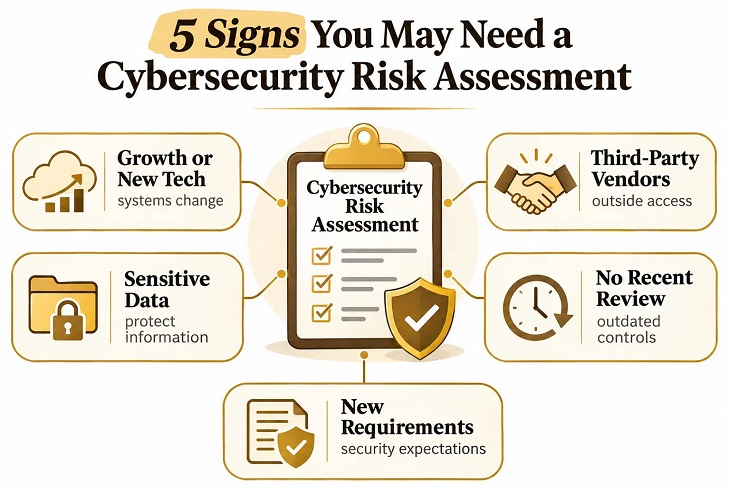
Certain business changes and security concerns can indicate that it’s time to review your cybersecurity risks. The following five situations are worth considering.
1. Your Business Is Growing or Changing Technology
Expanding your operations often means introducing new systems, employees, and business processes. These changes can affect how information is accessed, stored, and protected.
For example, moving business applications to cloud-based platforms may change who can access sensitive records and how those records are managed.
A cybersecurity risk assessment helps you evaluate whether your existing safeguards remain appropriate as your technology and operations change.
2. Your Organization Handles Sensitive Information
Customer records, financial details, and confidential business information require appropriate security measures.
If your organization collects or stores sensitive information, understanding how that information moves through your systems is an important part of managing risk.
An assessment can help identify weaknesses in data access, storage, and handling practices. These findings can guide improvements that reflect the type of information your organization manages and the potential consequences of unauthorized access.
3. Your Business Relies on Third-Party Vendors
Outside providers may support essential business functions, including cloud hosting, payment processing, and software management.
While these relationships can support daily operations, they may also introduce risks when vendors access your systems or handle business information.
A cybersecurity risk assessment can help you examine potential exposure associated with these relationships. Depending on the findings, a more focused third-party risk assessment may also be appropriate to evaluate individual vendors and their security practices.
4. Your Security Practices Have Not Been Reviewed Recently
Security procedures that worked when your business was smaller may no longer reflect how your organization operates.
Employee responsibilities can change, software may be replaced, and access permissions may remain active longer than necessary.
If your security practices have not been reviewed after significant operational changes, an assessment can help determine whether existing controls still address relevant risks.
There is no single assessment schedule that suits every business. Review frequency should reflect your organization’s risks, operational changes, and applicable requirements.
5. You Are Facing New Security or Compliance Requirements
Customers, business partners, and regulators may expect organizations to demonstrate appropriate cybersecurity practices.
For example, a potential client might ask about your access controls, security policies, or procedures for managing sensitive information before signing an agreement.
A cybersecurity risk assessment helps you understand whether your current safeguards address relevant security concerns. It can also identify areas that require improvement before you pursue specific compliance objectives.
What Happens During a Cybersecurity Risk Assessment?
Although the scope varies, a typical assessment involves three main activities.
- Identify important assets: Review the systems, information, and business processes that need protection.
- Examine threats and vulnerabilities: Identify potential security weaknesses and situations that could disrupt operations or expose information.
- Evaluate and prioritize risks: Consider how likely identified threats are to occur and how seriously they could affect your organization.
The findings can help you decide which safeguards need improvement and where to direct available resources.
How Is a Cybersecurity Risk Assessment Different From SOC 2 Readiness?
Both assessments may involve reviewing security controls, but they address different needs.
A cybersecurity risk assessment focuses on threats, vulnerabilities, and potential business impacts. A SOC (System and Organization Controls) 2 readiness assessment evaluates existing controls, documentation, and supporting evidence against applicable Trust Services Criteria before an independent SOC 2 examination.
If your organization is also preparing for an independent SOC 2 examination, understanding what a SOC 2 readiness assessment involves can help you distinguish compliance preparation from a broader cybersecurity risk review. While both activities can identify weaknesses in security practices, SOC 2 readiness focuses specifically on examination preparation. Your organization may benefit from both assessments depending on its security priorities and compliance goals.
What Should You Do After Identifying Cybersecurity Risks?
Identifying risks is useful when the findings lead to informed decisions and appropriate action.
Start by reviewing which risks could have the greatest effect on your operations. Then consider whether existing controls need improvement, responsibilities need clarification, or additional safeguards should be introduced.
For example, if an assessment identifies unnecessary access permissions, your next step might involve reviewing employee access rights and establishing clearer approval procedures.
You should also assign responsibility for addressing identified risks and monitor progress over time. Some improvements may require immediate attention, while others can become part of longer-term security planning.
Take the Next Step Toward Understanding Your Cybersecurity Risks
Business growth, changing technology, and evolving security expectations can affect your organization’s cybersecurity posture. Reviewing these changes through a structured assessment can help you identify important risks and determine where improvements may be necessary.
At ElevaTec Solutions Consulting, LLC, we support organizations seeking practical guidance on cybersecurity risk assessments, security controls, and risk management priorities. Our consulting approach focuses on understanding your existing practices and identifying areas that may require attention.
If you’re concerned about potential cybersecurity weaknesses or want to better understand your organization’s current risks, you can contact us so we can discuss your concerns and explore appropriate next steps for your business.